


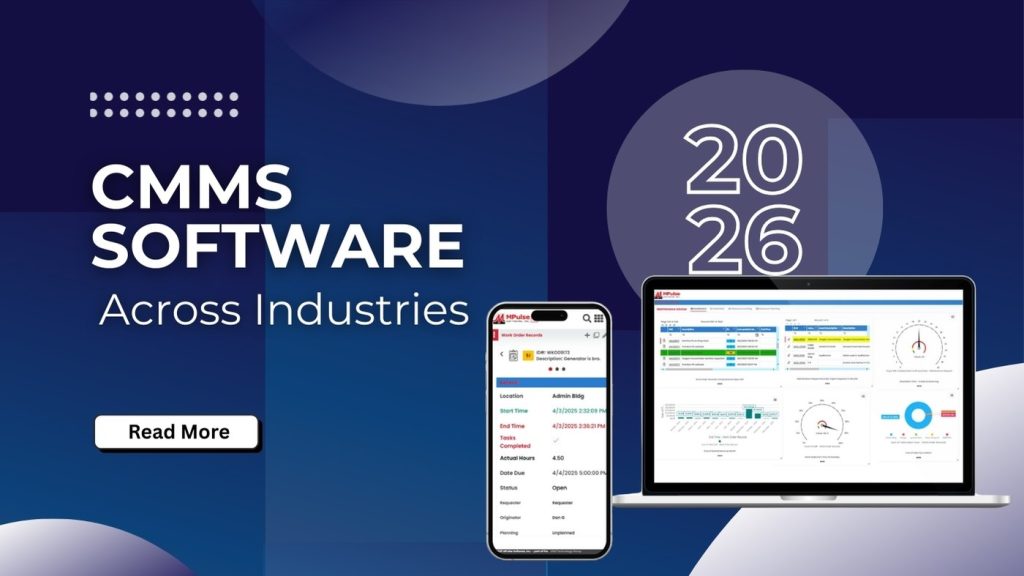
Maintenance challenges share common DNA regardless of industry. Equipment breaks down. Work orders pile up. Budgets get stretched. Technicians juggle competing priorities. These universal pressures explain why computerized maintenance management systems have found adoption across remarkably diverse sectors.
Yet each industry brings unique requirements that shape how organizations use CMMS capabilities. Understanding these industry-specific applications helps organizations recognize opportunities they might otherwise miss.
Healthcare: Where Maintenance Meets Patient Safety
Hospitals and healthcare facilities operate under regulatory scrutiny that most industries never face. Joint Commission accreditation, state health department inspections, and CMS requirements all demand documented proof that equipment receives proper maintenance.
The stakes extend beyond compliance. A failed HVAC system in an operating room cancels surgeries. Malfunctioning medical gas systems endanger patients. Elevator breakdowns strand staff and visitors in multi-story facilities.
Healthcare maintenance teams use CMMS to maintain inspection-ready documentation at all times. Every preventive maintenance task, every equipment inspection, every corrective action gets recorded with timestamps and responsible parties. When surveyors arrive, compliance reports generate in minutes rather than requiring weeks of file searching.
Beyond compliance, healthcare facilities leverage CMMS for managing diverse equipment populations. A typical hospital maintains everything from complex imaging equipment to kitchen appliances to parking lot lighting. Centralized asset tracking ensures nothing falls through the cracks.
Manufacturing: Uptime Is Everything
Manufacturing operations measure success in production output. Every minute of unplanned downtime represents lost product, missed shipments, and dissatisfied customers. Some facilities calculate downtime costs in thousands of dollars per hour.
This economic reality drives manufacturing maintenance toward prevention and prediction. Reactive maintenance is simply too expensive when production lines sit idle waiting for repairs.
Facility maintenance software solutions like MPulse help manufacturing operations implement robust preventive maintenance programs that keep equipment running. Automated scheduling ensures critical tasks don’t slip. Mobile access lets technicians document work without leaving the production floor. Asset histories reveal which equipment needs attention before failures occur.
Manufacturing environments also demand integration capabilities. CMMS platforms that connect with production systems, inventory management, and enterprise resource planning create unified operational visibility that standalone systems cannot achieve.
Education: Maintaining Learning Environments
Schools and universities maintain sprawling campus facilities with limited budgets and small maintenance teams. A single technician might be responsible for HVAC, plumbing, electrical, and grounds across multiple buildings.
These constraints make efficiency essential. Education maintenance teams cannot afford wasted trips, redundant work, or overlooked preventive tasks. CMMS helps stretch limited resources by optimizing technician routing, automating routine scheduling, and ensuring nothing gets forgotten.
Educational facilities also face seasonal intensity variations. Summer breaks bring opportunities for major projects impossible during academic sessions. CMMS helps teams plan and track these concentrated maintenance periods effectively.
Parent and student expectations add another dimension. Modern families expect school facilities to be clean, comfortable, and functional. Work order systems that allow staff to submit requests easily and track status transparently improve satisfaction across the school community.
Hospitality: Guest Experience Depends on Maintenance
Hotels compete on guest experience. A broken air conditioner, malfunctioning elevator, or plumbing problem doesn’t just inconvenience guests. It generates negative reviews that influence future booking decisions.
Hospitality maintenance operates under constant time pressure. Problems must be resolved quickly, preferably before guests notice. Response time tracking and escalation protocols become critical capabilities.
CMMS helps hospitality operations coordinate maintenance across housekeeping, engineering, and management. When housekeeping reports a problem during room turnover, the work order reaches engineering immediately. Status updates flow back so front desk staff can inform guests accurately. Nothing gets lost in communication gaps.
Preventive maintenance takes on particular importance for guest-facing equipment. Pool systems, fitness equipment, and in-room amenities all require regular attention to avoid failures during peak occupancy periods.
Commercial Real Estate: Managing Tenant Relationships
Property management companies maintain buildings they don’t own for tenants they must keep satisfied. This relationship dynamic shapes how commercial real estate approaches maintenance.
Tenant communication matters enormously. When tenants submit maintenance requests, they expect acknowledgment, updates, and resolution. CMMS platforms with tenant portal capabilities provide self-service access that improves satisfaction while reducing phone calls to property management staff.
Cost tracking takes on particular importance when maintenance expenses affect property profitability and tenant billing. Detailed work order costing helps property managers allocate expenses accurately, identify cost reduction opportunities, and justify charges to building owners.
Multi-property portfolios benefit from standardized CMMS deployment across locations. Consistent processes, comparable metrics, and centralized reporting enable portfolio-level management that fragmented systems prevent.
Government and Municipalities: Serving the Public
Government facilities serve citizens who expect functional buildings, maintained parks, and reliable infrastructure. Unlike private businesses, government maintenance operates under public scrutiny and political accountability.
Documentation requirements in government settings often exceed private sector norms. Public records laws may require retention of maintenance records for extended periods. Audit requirements demand clear trails showing how taxpayer funds were spent.
CMMS helps government maintenance operations demonstrate accountability through comprehensive record-keeping. Every work order, every expenditure, every vendor interaction gets documented in systems that support transparency requirements.
Government operations also manage diverse facility types. A municipal maintenance department might be responsible for city hall, fire stations, community centers, water treatment plants, and park facilities. Asset management across this variety requires systematic approaches that manual systems cannot sustain.
Food and Beverage: Safety and Compliance
Food processing and service operations face regulatory requirements that make maintenance documentation mandatory. FDA inspections, health department visits, and food safety audits all examine equipment maintenance records.
Temperature-controlled environments demand particular attention. Walk-in coolers, freezers, and refrigerated display cases must maintain proper temperatures continuously. CMMS can track temperature readings, schedule compressor maintenance, and alert staff when equipment shows early warning signs of failure.
Sanitation requirements intersect with maintenance activities. Cleaning schedules, sanitization procedures, and equipment hygiene inspections all fit within CMMS workflow management. Integrated tracking ensures food safety protocols receive consistent execution.
Selecting CMMS for Your Industry
While core CMMS functionality applies across industries, specific requirements vary. Healthcare facilities prioritize compliance documentation. Manufacturing operations emphasize integration and uptime tracking. Hospitality focuses on rapid response and guest communication.
Effective CMMS selection considers industry-specific needs alongside universal capabilities. Questions worth exploring include whether the platform serves similar organizations, what industry-specific features exist, and how compliance requirements are addressed.
Implementation approaches also vary by industry. A hospital implementing CMMS during active operations faces different challenges than a manufacturing facility that can schedule downtime for training. Understanding these industry dynamics helps organizations plan realistic adoption timelines.
The Common Thread
Despite industry differences, successful CMMS implementations share common characteristics. They centralize information that was previously scattered. They automate tasks that were previously manual. They create visibility that was previously impossible. They preserve knowledge that was previously vulnerable.
These benefits transcend industry boundaries. A hospital and a hotel face different specific challenges, but both struggle with fragmented information, inconsistent processes, and reactive operations when they lack proper systems.
CMMS doesn’t solve every maintenance problem. It provides infrastructure that enables better maintenance management. How organizations use that infrastructure determines outcomes. Those who commit to systematic implementation, consistent usage, and continuous improvement realize benefits regardless of industry.
The maintenance challenges are universal. The solutions, properly adapted, are equally universal.